Each day at Compact25, one member of Campus Compact's Board of Directors opened our general session with remarks about our purpose as higher education faculty, staff, students, and leaders and our responsibilities to our communities and democracy. Below, find partial transcripts of remarks delivered by campus leaders Mary K. Grant, Paul Pribbenow, and Havidán Rodríguez (or see the full recordings on our Compact25 YouTube playlist).
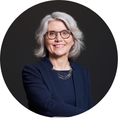
Mary K. Grant
President, Massachusetts College of Art & Design
The theme of this conference is Uniting through Public Purpose: Coalition Building for Impact. This reflects the work that we, that all of you who are here, are doing every day and for that, we are grateful.
40 years of Campus Compact is quite a milestone. Campus Compact was founded in 1985 by the presidents of Brown, Georgetown, and Stanford Universities, along with the president of the Education Commission of the States. These higher education leaders shared a concern about the ongoing health and strength of democracy in the United States. They believed that higher education could contribute more effectively to sustaining our democracy by building robust support structures for civic and community engagement. I think it is safe to say that those founding Presidents have long since left their roles, but it is equally safe to say that the necessity, the imperative for Campus Compact remains and is today, perhaps even more compelling and necessary.
It seems fitting that we are in Atlanta, home to the King Center – I’m reminded of the words of Dr, King when he said that “Today, our very survival depends on our ability to stay awake, to adjust to new ideas, to remain vigilant and to face the challenge of change.” These words ring very loud today, as we have witnessed over the last several years a growing distrust of organizations – of government, higher education, the media, and churches – to name a few.
In a recent conversation among some of my higher education colleagues with an official in DC, when we asked about what to do with this problem of distrust we were advised, “don’t talk about higher ed” rather, talk about your institutions, your impact, the difference that you make.
Through our work in community and civic leadership, problem solving, engagement, and education – we have powerful results that does just that, this work has a significant impact. The work that you are doing has results, it builds communities, and it provides our students with skills that they can and do use successfully throughout their professional, civic, and personal lives.
Bill DeBaun from the national college attainment network has a piece in today’s edition of Inside Higher Ed, in it he notes, that despite the very challenging times and the relentless messages and questioning of the value of higher education - Students themselves are telling us they still want to go to college. FAFSA completion is ahead, Common App is up, Fall 24 Semester enrollments were up, and overall grad rates are improving – not for all students and not across all institutions, but they are improving.
He also references the significant gap between jobs that currently or will require postsecondary education or training and the percentage of working adults with a postsecondary degree or credential. He closes the piece by saying that “students still believe in the promise of higher ed and so should all of us.” This is a roomful of believers in both the promise and the power of higher education, but clearly, we have work to do. It is important that we keep working to share what we are doing, while also doing a better job of elevating the impact and the outcomes.
Let’s also be reminded that we need one another, that we are stronger when we work together to stay true to our mission of opening even wider the doors of opportunity and education. Let’s build upon the networks in this room, remain hopeful, and help all our current and future students realize the promise of higher education and let’s take to heart the wisdom of Dr. King when he said, “We must accept finite disappointment but never lose infinite hope.”
See Dr. Grant's full remarks on YouTube →
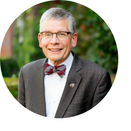
Paul Pribbenow
President, Augsburg College
I have been reflecting on what it means for all of us gathered here at Compact25 to be “called for a moment such as this.” Perhaps you, too, have asked yourself the same question. Let me parse that question in reverse order:
- “Such as this” - what do I mean by “this”? We’re all keenly aware that this is a moment of significant disruption and chaos, aimed at the institutions and values we cherish. Often characterized as woke, elitist, out of touch, and unaccountable, our colleges and universities have been targeted by a new federal administration in ways we may never have imagined. “Insanity” is how one presidential colleague labeled it. Insanity, indeed.
- But I also believe this is a “moment”, a blip on the long arc of higher education’s role in our democracy. It is a tough moment, to be sure, but we must look to horizons past, present, and future, to ground ourselves and to understand what we must do now in this moment to protect and preserve the missions and values we seek to advance.
- And that means we must embrace our calls in this moment - the idea of a calling or vocation that comes from our faith and ethical traditions and that equips us to embrace the many roles we live out in the world as professionals surely, but also as parents and children and siblings and citizens and neighbors and activists, roles that often intersect and demand thoughtful balancing of all that we are called to be and do.
For me, the response to the question of what it means to be called to a moment such as this must be a moral framework that guides our thoughtful and reflective practice as individuals and as communities of meaning and practice. I have found important inspiration for my leadership and the moral imperative for this moment in the mission and work of Campus Compact.
“Campus Compact supports, engages, and challenges higher education to realize its public purpose. Mobilizing students, staff, faculty, and administrators, Campus Compact empowers colleges and universities to advance their academic and civic missions by partnering with communities to address complex social issues and further equity, justice, and prosperity for all.”
I had the privilege to lead the Board task force that led to Compact’s 2025-2030 strategic plan, a plan that boldly positions Campus Compact for its commitment to the public purposes of higher education and the distinctive role we can plan in strengthening campus-community partnerships, supporting our remarkable students in their vocational journeys, and sharing our stories of the impact our colleges and universities have in the communities they serve.
In that context, let me say a few words about that moral imperative for this moment, what I call a democratic social ethic, and how Campus Compact’s strategic work supports all of us in our efforts to sustain a just, equitable, and prosperous democracy.
Each fall, I give an opening convocation address to our incoming students with the title “What is required of you?” After referencing the Hebrew scriptural injunction from the prophet Micah, “to act justly, love kindness, and walk humbly with your God” - a faith claim that I must leave to our students to work out - I then suggest that there are three things we do require of them, and those three requirements summarize for me a democratic social ethic that may be more relevant than ever for a moment such as this.
The first requirement is to show up, a claim that is central to Campus Compact’s mission to support the work we do on our campuses and in the communities we serve. But, as we all know, it can be tough to show up when we are distracted and exhausted and depressed by the scope and scale of the challenges we face. But show up, we must.
But, of course, this is not simply about showing up with our physical presence. Showing up is also a sort of spiritual practice. It is about being present now. It is about being in relationship to each other and our neighbors. It is about accompanying each other on a journey that is both solitary and social. It is about knowing our whereabouts and our neighbors. The famous educational philosopher, John Dewey, said that genuine education is not preparation for life, it is life itself. And if you believe that – as we do here at Campus Compact – then showing up, being present now, is the key factor in whether or not we are able to create the sort of world we value. Show up, please.
The second requirement is pay attention. Simple yes, but the equally simple fact is that we live in a world full of distractions and paying attention doesn’t come easy. This may be the most important ethical requirement in these times when chaos and confusion reign.
Like you, I’m on social media. I have an iPhone and an iPad and a laptop. I read two newspapers each morning and probably have 20 magazine subscriptions. I do my best to lead a wonderful and complex university. I have two children, a wonderful spouse, and a life full of things I “must” pay attention to – and it’s hard work. And I’m old. I always say to our students: You are young and you have grown up in a time when multi-tasking is not an option, it’s an expectation. I really can’t imagine how you keep it all together. I admire you, but I also worry about you.
So here I stand asking you to pay attention, find ways to put away the distractions you can control.
But it is more than that, of course, because even when we have put away all those sources of distraction, it remains our responsibility to figure out what is most important and how we can make what is important the center of our life. The sociologist, Robert Bellah and his associates, have written that “Democracy means paying attention,” (from The Good Society) by which they mean that the psychic energy we use to pay attention is the key to the sort of person we hope to be – as individuals and as a society. If we continue to be distracted, our attention and the energy that it requires of us will also be distracted, and the values and people and ideas and causes we should care about and attend to will not get our energy. And we will not become the people we want to be. Pay attention, please.
And finally, do the work, a final requirement follows logically from the first two. If you show up and learn to truly pay attention, you will find that there is work that must be done. Some days, the work will be assigned to you. We all have jobs and duties that mean there is work we must do.
But more and more, on many days the work must be ours to discern and pursue. There will be no one there to tell us what to do. You will need to seize the work that needs to be done. I believe deeply that the institutions that are part of the Campus Compact community reflect the profound truth at the heart of our academic missions that the work we learn to do on our campuses – in the classroom, on campus, in our neighborhoods and around the world – is the basis for pursuing the important work to be done in the world – and we need to do it. There is utility to the education we offer, there is purpose and direction, there is work to be done by educated folks. Work we are called to do. Work that might just have to do with what the prophet Micah claimed – the work of justice and compassion and humility. Do the work, please.
And this is what this democratic social ethic looks like on our campus - as I’m positive it does for most of you. On the ground on campus, in our neighborhood, and wherever we live and work, I see a reality different from the claims by many who criticize higher education. I see students who see education as a gift that carries with it a responsibility to give back. I see faculty and staff committed to our vision that students receive a three-dimensional education – an education that equips them to make a living, make a life, and build community. And I see alumni and neighbors who care about each other and the world, and who are working each and every day to support a just and inclusive democracy.
So here is my shorthand version of a democratic social ethic - show up, pay attention, and do the work. And here is this remarkable community of practice we call Campus Compact that supports, challenges, and inspires us to do just that - to be called to a moment such as this!
See Dr. Pribbenow's full remarks on YouTube →
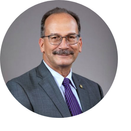
Havidán Rodríguez
President, University at Albany
It has been inspiring to spend the past two days with higher education leaders from across the country who share Campus Compact’s vision. Together, we are working toward an equitable, accessible, and just democracy. For 40 years, Campus Compact’s mission has been critically important. But perhaps never more so than today.
We find ourselves leading during a time of immense uncertainty. Every day we are confronted by skepticism about the importance of our work. We see hostility toward bedrock principles that we hold dear, like academic freedom and freedom of speech. We are confronting challenges to core values like diversity, equity, and inclusion. Whether your institution is in a blue state, a red state, or a purple state, I have no doubt that you have encountered these critical challenges.
In my view, an attack on higher education, on our mission, or on our values is a direct attack on our democracy. Our mission, our work, and our roles are imperative for an equitable and just society. In challenging times like these, the public mission of higher education is not just more important, it is the light by which we will find the path forward that is critical to our democracy.
Our colleges and universities do so much more than educate students. We are the standard-bearers of civil discourse and civic engagement. We provide resources and support to our communities on campus and beyond. We make discoveries and create knowledge that improves lives. We are the architects of a just, equitable, and prosperous future. Our students – both local and international – look to us to guide them through these tumultuous times. Our communities count on us for support and partnership.
Consequently, we cannot despair, and we cannot stop our work. We must strive, with great resolve, to continue to improve our societies and to educate engaged global citizens who will transform the world for the better.
For 180 years, the University at Albany, has been a transformative force in the City of Albany, in the Capital Region, and in the great state of New York, and beyond. As one of the most diverse research universities in the country, we are developing the leaders, the knowledge, and the innovations that will create a better world. Our commitment to our mission, our values, and our core goals is resolute. This is why our and your engagement with Campus Compact is vital.
By harnessing the wealth of knowledge and energy in this room, we will empower each other and our institutions to build strong communities where democracy can flourish. I hope that throughout the course of this conference you have learned something or made a connection that inspires you to move forward in your work. We have clearly heard the clarion call for action and transformative leadership.
What should we then, as institutional leaders, be communicating to our campus communities? Just yesterday, I sent an email to my faculty and staff at UAlbany in which:
- I thank them for their ongoing work and strong commitment to our students and our institution. Appreciation for their work is always important, especially in these uncertain and challenging times.
- I acknowledged their concerns and emphasized that we are:
- Monitoring federal developments closely
- Communicating with our campus community as necessary
- Coordinating with the State University of New York (SUNY) and elected officials
- Planning across divisions
- Advocating for higher education broadly—and UAlbany specifically
- And we are taking timely action to protect our community and uphold our values
I also emphasized four key points, which I would also like to share with you as members of Campus Compact:
- First, we are not retreating from our mission and our commitment to our values is unwavering.
- Second, we are not standing idly by. We are fully engaged in understanding how federal policies could impact us and we are doing everything possible to mitigate their adverse effects.
- Third, we are not facing this moment alone. We are working closely with SUNY and our state and federal elected officials. We are also leveraging our relationships with national higher education organizations, such as Campus Compact, to stay informed and shape our response.
- Finally, we are responding proactively to the shifting landscape.
We need to keep our communities informed during these uncertain times. Don’t get me wrong, we understand the critical circumstances, challenges, and issues that we are confronting. But we also need to open a path forward and must strive to emerge triumphant.
Dr. Martin Luther King Jr. said, “Darkness cannot drive out darkness; only light can do that.” Within each of you is the capacity to be that light. So wherever you see darkness, shine a light. Wherever you see racism or discrimination, demand acceptance. Wherever you see fear, seek understanding. Wherever you see loneliness, provide connection or a word of encouragement. Whenever you see anxiety and despair, provide hope.
Let me now conclude as I did in my letter to my campus community. I understand the concern many of you are feeling today, but I take strength from the knowledge that higher education has weathered many storms since our inception. But even in times of upheaval, we have persevered, we have grown, and we have emerged stronger and more resilient.
Our work is vital, and your contributions are essential to our individual and collective success. We are a force for good—locally and globally. Let us continue moving forward together with purpose, clarity, and commitment.
See Dr. Rodríguez's full remarks on YouTube →