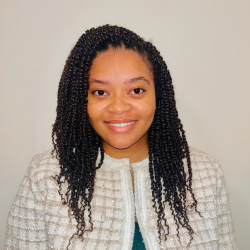
 By ZaTayvia Hayes
University of Texas at Austin
The Rural Youth Voices Initiative seeks to empower rural youth to better serve their communities, reshape dominant narratives about rural engagement, and encourage rural-serving organizations to center youth voices. Twelve Fellows from across the United States received $500 and support from Campus Compact to support a narrative change or civic engagement project in their community.
My name is ZaTayvia Hayes, a proud graduate of the University of Texas at Austin and Teachers College, Columbia University. I currently serve as a high school teacher in Greenville ISD, the Secretary of the Honey Grove School Board, and the newly elected Secretary of the Honey Grove Chamber of Commerce.
I’m from Honey Grove, Texas, a close-knit community of about 1,700 residents. Our town is predominantly White, with Hispanic/Latino and Black residents making up a significant portion of the population. With a median household income just over $47,000 and an 11% poverty rate, Honey Grove reflects a modest, working-class community.
My current project focuses on the restoration and renovation of Honey Grove’s historic Crockett Park, a space deeply rooted in our town’s identity and full of potential to serve generations to come. A National Recreation and Park Association (NRPA) Survey confirmed there are approximately 10,000 local governments in the U.S. that provide parks and recreation services. In rural areas in the South with populations under 20,000, 33.1% of local governments offer these services. Parks are vital to the sustainability and resilience of all communities. They serve as spaces for physical activity and relaxation, they contribute to the health and well-being of residents, and foster social cohesion, which are essential for a healthy, productive society. Outside of the library, school events, and religious institutions, parks act as inclusive spaces where people from all walks of life are offered opportunities for recreation, education, and cultural expression.
Unfortunately, rural communities often face challenges related to the quantity and quality of recreational parks that support physical activity or social cohesion. For instance, the availability of trails or recreational activities is are critical feature of effective parks; however, many rural areas lack these resources due to financial constraints.
Rural parks often face significant financial challenges that limit their resources for effective park development. At the same time, studies show that rural parks are frequently underutilized. They often lack features residents value such as sports fields, restored infrastructure, organized programs, and safe walking routes — issues we are familiar with in Honey Grove. The City of Honey Grove is anticipating growth, and securing funds for park enhancement should be a priority for our current and future community.
Through the Rural Youth Voices Initiative fellowship, I was able to financially contribute to the Honey Grove Crockett Park. With this opportunity I partnered with the Honey Grove Beautification Team to repaint and restore the park equipment and improve accessibility to encourage physical activity, restore community value, and increase park use/visitation. By the end of the summer we had installed new soccer goals, a volleyball net, as well as repainted the park benches and equipment. Thanks to additional contributions from community members inspired by our efforts the park also gained a new walking path and a freshly repainted basketball court. By mid-fall, our city secretary partnered with the local light company to restore lighting throughout the park.
Furthermore, we collaborated with 007 Farms to create a plan to plant native trees and flowers & install purple martic birdhouses to strengthen the park’s “Green” infrastructure practices. Research shows that these practices positively influence the frequency and duration of people’s park visits, ultimately supporting higher levels of physical activity and life satisfaction. For Phase 1 of native trees and flowers project, we planted native flowers around the newly painted and decorated gazebo. Finally, we are introducing Winter 2026 storybooks around the walking trail to promote literacy and learning while creating meaningful outdoor experiences for residents of all ages.
The first phase of work at Crockett Park has successfully enhanced civic engagement and restored hope for the future of our small-town community. It has also improved play opportunities for youth and young adults, who are now actively enjoying soccer, volleyball, and basketball. Moving forward, we aim to raise funds for new playground equipment and organize community events like movie nights and Easter egg hunts to further strengthen community bonds.
After studying K–12 public education from the perspective of rural, southern communities my understanding of the disparities and challenges rural school systems and students face has been deepened. Limited resources, underfunded programs, and aging infrastructure are persistent challenges that hinder both academic achievement and community development.
Now, as an active member of my community and being engaged in the political sector, I recognize a critical issue facing rural communities: the need for a more efficient and effective system of data collection. Accurate, timely data is essential to securing appropriate funding from local, state, and federal governments. In addition, there must be greater advocacy for the renovation and long-term sustainability of public spaces such as schools, community centers, and parks — which serve as vital hubs for education, engagement, and social support for our youth. Investing in these areas not only improves quality of life but also strengthens the overall fabric of rural communities. Addressing these systemic issues with targeted solutions is essential for ensuring equity and opportunity for all residents, particularly the next generation of students and citizens in rural America.
Growth starts small, and then one day we will look back where we started and realize the small steps we took every day paid off to ensure the prosperity of the Sweetest Town in Texas.