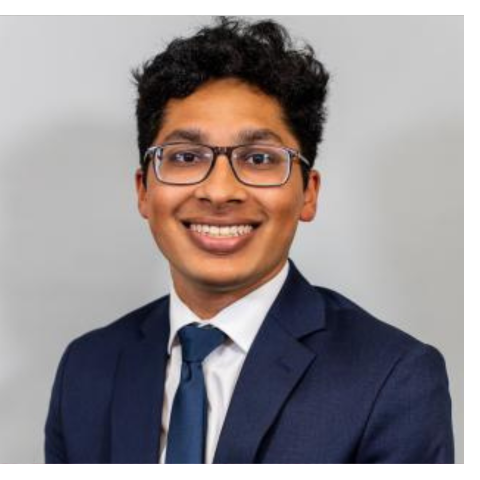
 By: Dhairya Desai
University of North Carolina at Charlotte
2024-2025
Public health inequities remain among the most pressing topics to address concerning cardiovascular outcomes in the United States. My name is Dhairya Desai, and I am a recent graduate from the University of North Carolina at Charlotte. I graduated with a B.S. in Chemistry with a Biochemistry Concentration and a B.S. in Biology, on the pre-medical track. My entry into these realities at UNC Charlotte was not through a lecture hall experience but rather through my first exposure to a CPR course. What began as a somewhat rushed component of premed training then pointed me toward larger questions. The lack of equitable access to basic emergency training and care is one of them.
The American Heart Association states that every year, at least 350,000 cardiac arrests take place outside of hospital settings in America. Survival rates, however, are dismally low when bystanders fail to initiate immediate action. Less than 10% actually survive without any intervention. These outcomes are not equally distributed. People in Black, Latino, and poor neighborhoods are far less likely to get bystander CPR, and such disparity harms the already vulnerable survival rate.
In my surrounding areas, these disparities become stark. Traditionally, communities of color tend to face multiple systemic barriers to receiving health care and health education, such as financial constraints, transportation challenges, language barriers, or just plain distrust in medical systems. A team of Levine Scholars, including those who saw these gaps, sought to address them through Heart 2 Heart—a program that provides free CPR education and certification to underserved communities.
The Heart 2 Heart mission was straightforward, to improve access to lifesaving skills and thereby reduce racial and economic disparities in cardiac survival. We began our efforts alongside the Keith Family YMCA in northeast Charlotte, a site that is already well-established within the community and trusted by local families. Offering courses in a familiar setting helped alleviate some of the apprehension potential participants might have otherwise felt toward institutional programs, actively encouraging them to participate.
Our aim was to remove logistical barriers by providing free transportation to the center, childcare during training, and free registration. These production efforts enabled community members who would have previously considered CPR education and the opportunity itself as far-fetched to attend training. Initially, CPR manikins and instructors were in short supply; therefore, classes could only be held for small numbers of students. Nevertheless, there was more interest than we could accommodate during those very initial sessions.
Through the grant, we were able to expand our commitment to the community by adding additional CPR manikins with diverse skin tones and body types, thereby increasing the inclusivity and realism of the experience. We also sought to improve quality instruction with the purchase of AED trainers and individual CPR masks. T-shirts and stickers were distributed among participants in an attempt to establish an identity for Heart 2 Heart. A common expression among the participants was one of excitement, as they were now able to act in the event of an emergency. This fostered not only knowledge but, more importantly, confidence.
Our outcomes changed as the program went on. Over the course of a few months, Heart 2 Heart has now held over 40 sessions, certifying more than 210 people in CPR. This figure goes way beyond a statistic. Every certified person is capable of acting in an emergency and potentially saving someone's life. Many attendees informed us that they had never received any emergency training before. Other attendees said they were refreshing their knowledge after a long period of not using it. The input received further shaped our program and provided us with valuable insights into today's ongoing demand for accessible health education.
The diversity of those trained underscored the reach of our initiative. There were high school students, young adults, middle-aged parents, and older adults. Some were taking care of family members, while others were driven by their own experiences. Regardless of background, the message was clear: Everybody wants to be prepared, and they just need that opportunity.
We are now pushing Heart 2 Heart toward greater horizons. We are in the process of adding Stop the Bleed and basic first aid training to our curriculum to prepare people for a more significant array of emergency situations. These are intended to supplement CPR training, so a more comprehensive foundation in lifesaving care can be established. To reach new groups with the training, we are developing partnerships with schools, organizations, and nonprofits throughout the city.
Gathering and analyzing anonymous feedback from participants, along with tracking outcomes, will enable us to measure our effectiveness as a training program and continuously refine our approach. We aim to meet the evolving needs of the community rather than adopting a one-size-fits-all approach.
We have trained a new set of scholars to become the next generation of leaders. This fosters continuity and helps sustain the initiative within the college's culture of service. In addition to our internal succession strategy, we are reaching out to area hospitals and health-related foundations to seek sponsorships that will provide free materials, certification cards, and training for participants.
The vision of Heart 2 Heart is simple but urgent: bring lifesaving knowledge to historically excluded communities. While CPR training may seem a far cry from health equity at first, it is a potent solution for that end. It empowers ordinary citizens to prevent potentially fatal events; therefore, this empowerment builds not only skills but also trust — trust in themselves, trust in their neighbors, and trust in their ability to effect change. Heart 2 Heart is a model for how community-based care could be realized. We are creating a network of individuals who are prepared to intervene before professional help arrives rather than relying solely on healthcare institutions whenever an emergency occurs.
As I plan my future career in medicine, my learnings on the subject of care could never have been imparted by academic training alone. Public health begins with a conversation, one that involves listening and providing pragmatic tools that meet people wherever they are. Heart 2 Heart is not for one-time interventions; instead, it builds a basis on which something growable and adaptable can be created and continue to serve long after the initial team has gone.
Community health does not always begin in the hospital. Maybe it starts in a YMCA gym, at a school event, or in a church basement. The moment people gather with a shared belief that everyone deserves access to tools to maintain their own health and the health of those around them, a community is born.