From the president
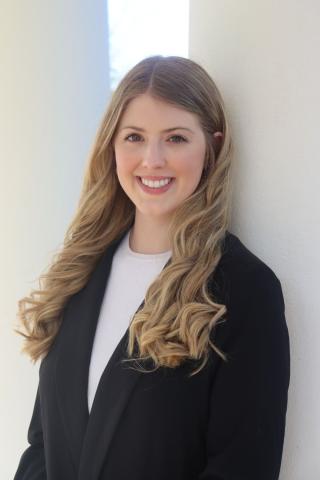
Emma Hinson, a third-year student at the University of Virginia, is a civic-minded scholar who integrates academic inquiry with ethical, community-centered leadership. A Human Biology major and Bioethics minor, her coursework focuses on public health policy, religion and environmental ethics, and access to dental care. She is also a member of UVA’s Public Service Pathways program, which supports students in integrating public service into their academic and professional journeys.
Emma complements her academic pursuits with hands-on leadership in the local community. She leads the Gallastar Farms program through Madison House, UVA’s student volunteer center, which partners with a therapeutic riding center to support equine-assisted psychotherapy. Her involvement has deepened over time—from volunteer to program director to head program director—where she now mentors peers, trains new leaders, and strengthens relationships with community partners. She also volunteers at Remote Area Medical dental clinics and supports students through UVA’s Student Disability Center. Emma approaches her work with humility, accountability, and a strong ethic of not overpromising or underdelivering. She leads with a spirit of collaboration, clarity, and purpose—qualities that position her to make a meaningful, lasting impact in her community.
Personal Statement
Even as a child, public service was a cornerstone of my life. I remember spending time with my parents in the food pantry and tutoring center, watching them dedicate themselves to helping others. That early exposure planted the seed for my own commitment to service. In high school, I focused on expanding access to education by increasing after-school resources and providing
tutoring in low-income communities. In college, I’ve built on that foundation, broadening my efforts to include environmental sustainability and animal welfare, while continuing to volunteer at free dental clinics across Virginia. These experiences have taught me to approach social issues with humility and a willingness to listen. I’ve seen how meaningful progress begins with understanding. The issues we identify from the outside often differ from what communities know to be most urgent. Immersing myself in communities different from my own has helped me better recognize both the challenges they face and the solutions that matter most. That being said, I believe collaboration—across majors, socioeconomic backgrounds, and racial identities—is essential to lasting change. When we come together, share knowledge, and uplift one another’s voices, we create stronger, more inclusive solutions to public problems.