From the president
Daphne Nwobike, a junior Politics and Spanish major at the University of the South, devotes her time working with communities that often go unseen and whose voices are rarely heard. Immigrating with her family to the U.S. from Nigeria in 2016, Daphne witnessed first-hand the challenges of understanding immigration law services, the lack of immigrant voices in that process, and the need for advocacy for those not yet able to advocate for themselves. As a Bonner Leader, she has worked with those experiencing food scarcity, women who have been victims of domestic violence and drug addiction, children who have been separated from their mothers and have experienced trauma, and with a small black community that, since the University’s founding in an era of slavery, has not felt recognized within the University community. Through a summer internship and a semester-long course, Daphne provided immigration support services and developed skills for legal advocacy work, work that she intends to continue as an immigration lawyer after college. She sees and values those that are dismissed, she works to address the impact and trauma of poverty, and she is wholly committed to a life lived in the service of others.
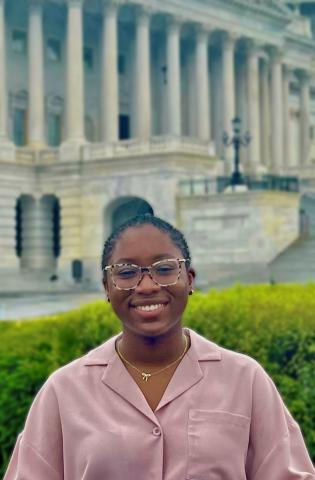
Personal Statement
Being a first-generation Nigerian immigrant has profoundly shaped my worldview and passion for addressing systemic issues that affect disenfranchised communities. During my time at Sewanee, I have worked to confront these inequities through the Bonner Program, which has enabled me to address food insecurity at the Community Action Committee, mentor young children at Blue Monarch Women’s Shelter, tutor middle school students at Westwood Middle, and support adults with disabilities at the New Life assisted living center. These experiences, along with guiding a Venezuelan asylee through his Adjustment of Status process, assisting refugees in Memphis with job applications, and my growing interest in pursuing a career in immigration law, have taught me that it is impossible to be an effective legal representative for marginalized groups if I do not deliberately learn from their stories through intentional community engagement. Serving others has become my way of caring for myself as I confront feelings of fear, loneliness, and helplessness and transform them into forces of love and empowerment for others. I am always eager to support others because I understand what it feels like to face adversity in silence and how transformative the smallest acts of kindness and service can be.